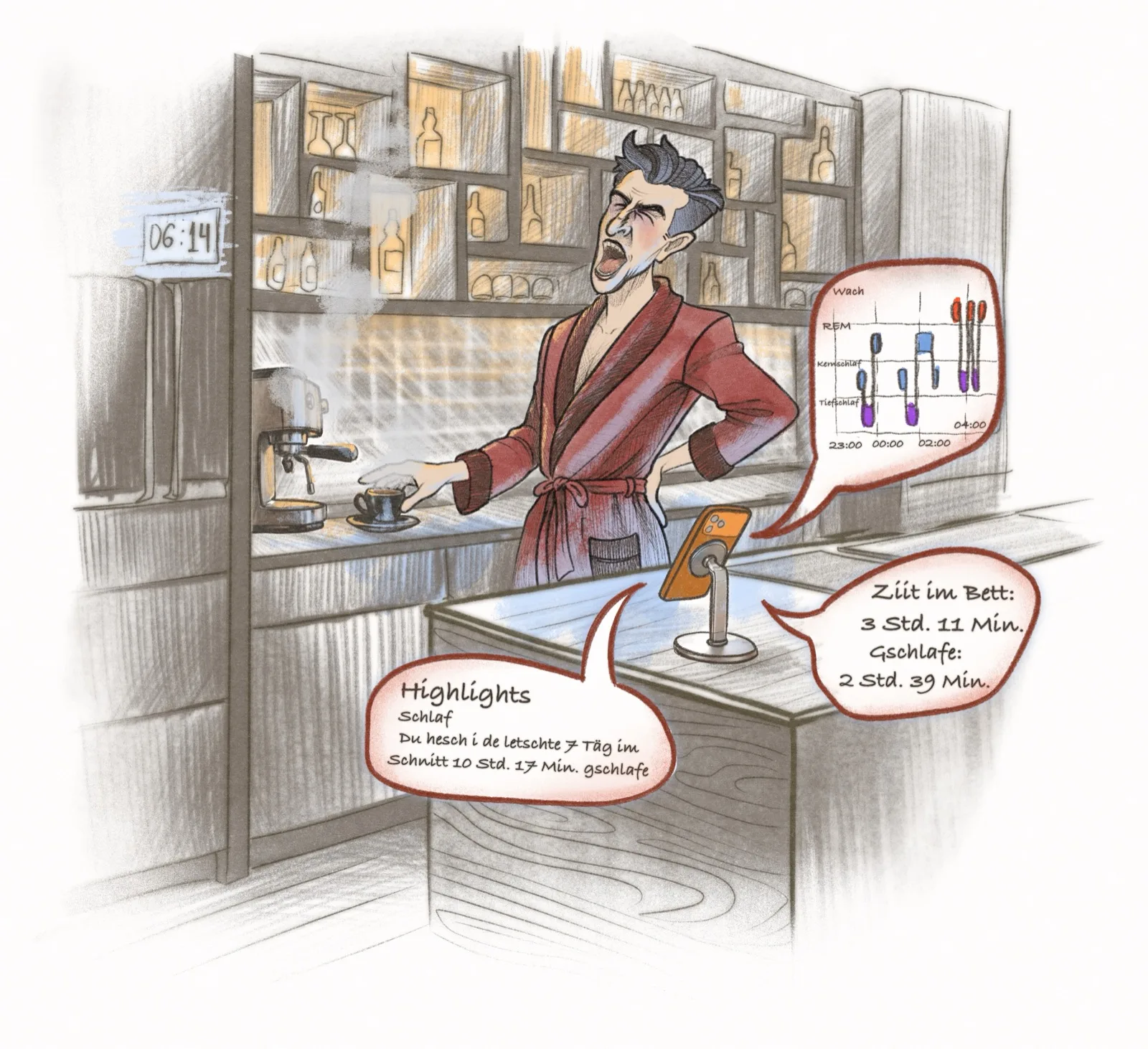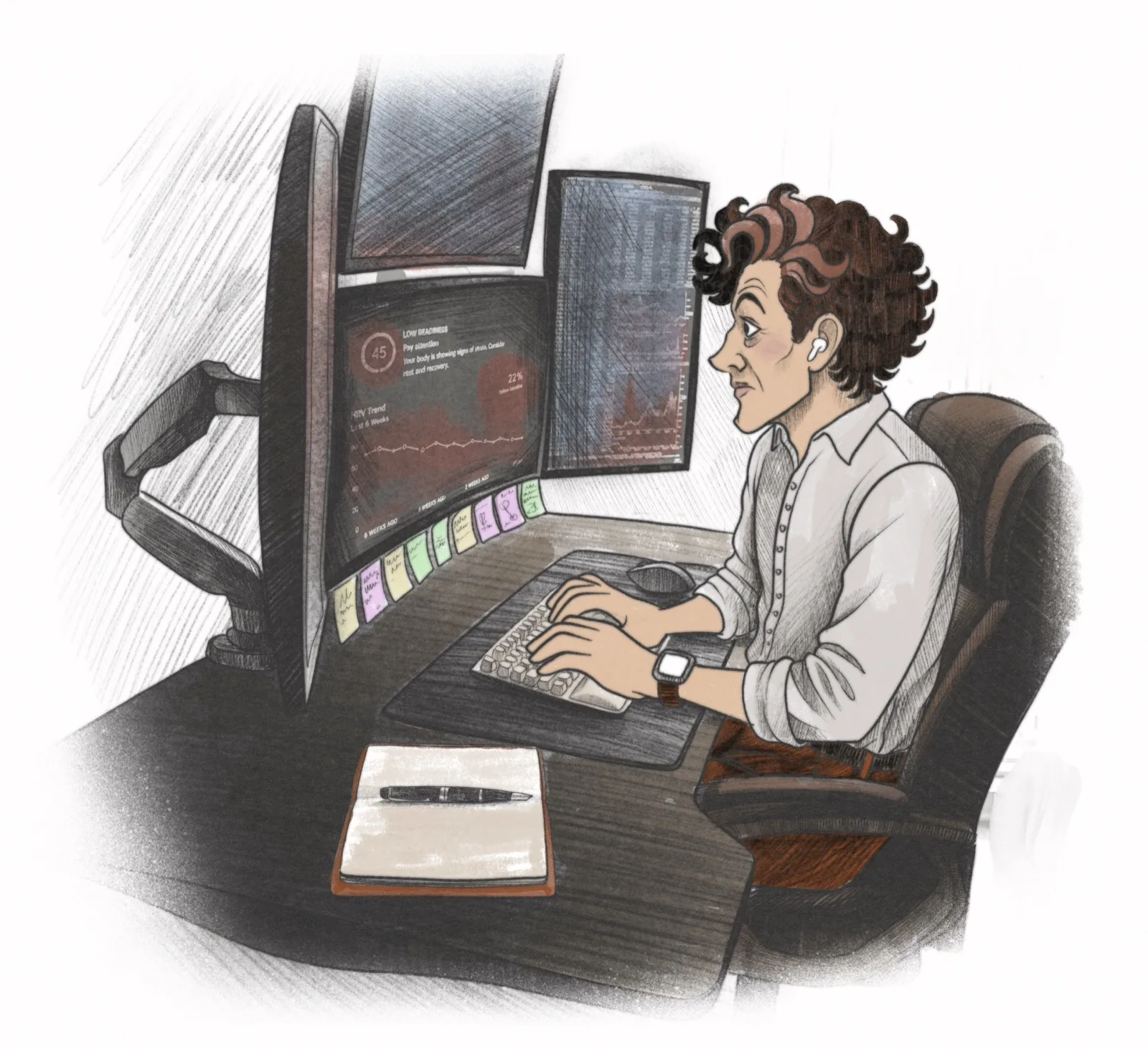
You moved to Zürich for a tech role in Oerlikon, a research seat at ETH, a finance posting at Paradeplatz, or one of the international organisations. Within the first month You need a physician and a medical practice. Search-engine results give a long list of practices. Some advertise English. Few explain what English-speaking primary care actually looks like in the Swiss system. This page is for You.
What an English-speaking GP service in Zürich actually offers
At Dein Team, this principle is embodied in our initial 45-to-60-minute consultation. This single, comprehensive session integrates the patient's medical history, a thorough physical examination, immediate point-of-care diagnostics, and a clear discussion of insurance matters.
In Switzerland, primary care is anchored by the generalist. Your GP is the central figure who manages the long arc of your health, overseeing everything from chronic condition management, vaccinations, and employer health checks to pre-operative clearances, school medicals, and ensuring the continuity of prescriptions from your previous country of residence.
This multilingual approach is well-established within Zurich's primary-care infrastructure. Given that 33.7 percent of the city's permanent population holds a foreign passport [Stadt Zürich Statistik 2024], the medical system has been adept at operating in multiple languages for decades.
From a practical standpoint, all outpatient visits are covered under Switzerland's compulsory health insurance (Grundversicherung), as mandated by law [KVG Art. 25 para. 2 lit. a]. Furthermore, the standardized TARDOC billing codes used for invoicing are recognized and reimbursed by most major international health plans—including Cigna, Allianz, AXA Global, and Bupa—according to the terms of their contracts. For life-threatening situations dial 144.
Swiss primary care vs what You are used to
The Swiss healthcare system resists straightforward definition by comparison. It is neither the nationalized, state-funded model of the NHS, the structured Hausarztmodell of Germany, the médecin traitant framework of France, nor the market-driven complexities of American managed care.
It is, rather, a unique amalgam, selectively incorporating principles from each of these disparate systems. For those navigating this landscape for the first time, five fundamental distinctions are of immediate and practical consequence during the initial month.
- A System of Open Access, Anchored by Primary Care. The standard model of compulsory health insurance (Grundversicherung) enshrines the principle of open access, granting patients the autonomy to consult specialists—such as a cardiologist, gynaecologist, or dermatologist—without a prior referral [KVG Art. 41].
The caveat, however, lies in the alternative insurance models. The more economical 'Hausarzt' (GP-led) and HMO variants operate on a gatekeeper principle, where your primary care physician must formally coordinate all specialist referrals. This structured approach is offered in exchange for a significant reduction in monthly premiums.
Consequently, the selection of an insurance model is not a trivial matter but a deliberate choice that should align with one's personal healthcare preferences.
You pay first, then claim. The professional purview of the Swiss general practitioner is remarkably broad. A single Swiss-certified internist (FMH) is typically equipped to administer vaccinations, perform minor surgical procedures, conduct in-house diagnostics such as ECGs, lung function tests, and ultrasounds, and oversee the comprehensive management of chronic diseases.
This integrated model occupies a unique middle ground, distinct from two more familiar paradigms. It diverges from the American tendency to seek specialist consultation for nearly every ailment, as well as from the British system, where the GP's primary function is often triage and referral.
In essence, the Swiss GP is positioned not merely as a gatekeeper, but as the patient's principal, long-term clinical leader.
- The electronic patient record is opt-in. The financial architecture of the Swiss healthcare system is defined by two core components: the annual deductible (franchise) and a mandatory co-payment.
Each adult policyholder must select a deductible, with options ranging from a minimum of CHF 300 to a maximum of CHF 2,500. Until this stipulated threshold is met, the patient bears the full cost of their medical services. Once the franchise has been exceeded, a 10 percent co-payment is levied on all subsequent costs, though this patient contribution is itself capped at a maximum of CHF 700 per year.
This structure necessitates a strategic decision: the selected franchise should be carefully calibrated to one's anticipated healthcare needs and expenditures.
For a fuller comparison the European Observatory's 2015 Switzerland review remains the standard reference [De Pietro et al., Health Systems in Transition 2015]. The OECD review is older but still accurate on the cost-share architecture [OECD/WHO 2011].
Insurance: Grundversicherung, supplementary, and international plans
Insurance is the conversation that consumes most of the first visit if You let it. We do it once, in fifteen minutes, before the medicine starts.
- Grundversicherung (compulsory). Mandatory within three months of taking residence. Identical benefits across all 50+ Swiss insurers; only the premium differs. GP visits, lab work, prescriptions, federal-schedule vaccinations, hospital in the canton of residence (general ward). Pick the model (standard, family doctor, HMO, telemed-first) and the franchise.
- Halbprivat / Privat (supplementary). Optional. Free choice of physician at hospitals, semi-private or private rooms, expanded ambulatory benefits, dental in some plans. Supplementary insurers can refuse based on prior conditions. Lock it in early or budget for private rooms separately.
- International plans (Cigna, Allianz, AXA, Bupa). Common for two-to-five-year postings. They reimburse the Swiss TARMED invoice in most contracts. Bring the policy document and claim template. We file directly if the contract supports tiers payant; otherwise You pay and claim.
The practical point: the same TARDOC-coded invoice from a Swiss practice is parseable by every major insurer in Europe, the US, and the international expat carriers. It is a workflow problem, and we run the workflow.
Telemedicine and house calls in 2026
Two persistent notions within the expatriate community—that Swiss medicine remains an exclusively in-person affair and that the practice of house calls has been abandoned—are now demonstrably anachronistic.
Contrary to the first belief, telemedicine is a fully integrated and reimbursed benefit within the Swiss healthcare system. This integration is the result of deliberate national policy, underscored by the federal eHealth Schweiz 2.0 strategy (2018-2024) and its successor, the DigiSanté programme (2025-2034), which aims for the comprehensive digitalisation of the nation's healthcare infrastructure [BAG, eHealth Schweiz]. In practice, video consultations are now standard for services such as follow-up appointments, the review of results, prescription renewals, and travel-medicine triage, all billed under official TARDOC telemedicine codes. While an initial consultation typically remains in person to establish a therapeutic relationship, the subsequent modality of care is dictated by clinical appropriateness.
Similarly, the belief that house calls are a relic of the past is incorrect. They remain an integral component of Swiss primary care, particularly in the City of Zürich and its environs. Physicians conduct home visits for various medically necessary reasons, including postoperative recovery, palliative care, situations involving patient frailty, or acute exacerbations where transporting the patient would be clinically counterproductive. These services are formally recognized and reimbursed under compulsory health insurance (Grundversicherung), billed using standard outpatient codes supplemented by provisions for travel time, as defined by federal statute [KVG Art. 25 para. 2 lit. a].
Shared decision-making in general internal medicine requires that the patient can follow the clinical reasoning. A consultation in a language the patient cannot speak fluently does not produce informed consent.
The first visit · what to bring and what happens
A first visit at Dein Team is 45 to 60 minutes. We do the paperwork once, then do the medicine. Bring six things if You can.
- Your insurance card. Swiss carrier (Helsana, Sanitas, CSS, Concordia, etc.) plus any supplementary or international policy number.
- A list of current medications. Brand and generic names, dosages, frequency. Photos of the boxes work. We translate to Swiss equivalents on the spot.
- Your vaccination record. From any country. Yellow WHO cards are universal. We add Swiss-schedule entries to the same booklet.
- The last full blood panel and any imaging from Your previous country. A PDF on Your phone is enough. We will compliment any missing test.
- A short written medical history if it is complex. One page coverering surgeries, chronic conditions, allergies, family history.
- Your Anmeldebestätigung and residence permit. Needed for the patient file and some insurance verifications.
The patient consultation is a comprehensive and methodically structured process. It commences with a thorough review of the patient's medical history, followed by a complete physical examination, including the measurement of vital signs such as blood pressure and pulse.
Where clinically indicated, this initial assessment is supplemented by immediate diagnostics. This may involve phlebotomy (blood draw) and urinalysis. Furthermore, an electrocardiogram (ECG) is typically performed for patients over the age of 35, those with a known cardiac history, or in instances where anomalous data from a personal health device warrants investigation.
The consultation then transitions to a structured dialogue focused on outlining a proactive health plan for the upcoming year. Each visit concludes with the establishment of a formal, written care plan and a recommended timeframe for a follow-up review.
A full report of the consultation is documented in your permanent patient file the same day. Upon request, a copy of this report can be securely transmitted to you via encrypted email.
Family enrolment, school medicals, and prescription continuity
For families relocating to Switzerland, the initial transition involves three crucial, yet often postponed, administrative tasks. Our practice is structured to address and resolve these matters efficiently within the first month.
1. Family Enrolment
The process of family enrolment is designed for simplicity. Your partner, children aged 16 and older, and any parents residing in your household can be registered either during your initial consultation or at a subsequent appointment. A dedicated, confidential medical file is created for each individual.
For adolescents, a key aspect of their integration into the healthcare system involves coordination with the Canton of Zürich's official school medical service (schulärztlicher Dienst), which conducts mandatory health assessments at specific ages [Volksschulamt Zürich]. It is important to note that the role of the school doctor is distinct from that of the primary care physician. With parental consent, reports from both are consolidated into the child's comprehensive medical record.
2. Employer-Mandated Health Checks
We regularly conduct employer-required health assessments, such as the Eintrittsuntersuchung (entry examination), executive physicals, or baseline evaluations mandated by insurance providers. The financial responsibility for these examinations typically rests with the employer. Our clinic is adept at providing the specific documentation formats required by most Swiss employers and global corporations, which generally include a one-page summary, a detailed clinical attachment, and a formal fitness-for-duty letter where applicable.
3. Prescription Continuity
The continuity of prescription medication is a frequent and often underestimated challenge for new residents. This process is governed by three key principles.
- First, medications classified as controlled substances under the Swiss Betäubungsmittel (BtM) list cannot be dispensed with a foreign prescription; a new prescription must be issued following a clinical review.
- Second, advanced biologic drugs—including monoclonal antibodies, GLP-1 agonists, and modern psychiatric medications—are typically available in Switzerland under the same International Nonproprietary Name (INN), though often marketed under a different brand.
- Finally, certain formulations, particularly specific ADHD stimulants from the United States and some psychiatric medications from the United Kingdom, may not have an exact Swiss equivalent. In these instances, we endeavor to collaborate with the original prescriber to identify a suitable therapeutic substitution.
Where this article sits in the DTL cluster
If this answered Your first question, the next ones in the same cluster:
- Travel medicine and vaccinations in Zürich. Yellow fever, malaria prophylaxis, business-travel vaccines.
- Expat baseline health check. A 30s-to-40s baseline including bloods, ECG, body composition, and a twelve-month plan.
- Wearable sleep-data review. What Your Whoop or Oura data actually says clinically.
- Pre-op assessment in English. Swiss internistic clearance for elective surgery abroad.
- Swiss private insurance for primary care, explained. A deeper read on Halbprivat and Privat.
The cardiology side of expat primary care (chest-pain workups, atrial fibrillation flagged by a smartwatch, executive cardiology) sits with the partner brand: Executive cardiology · DTH.
Frequently asked questions
Do I need to register with a GP within a certain time after moving to Zürich?
What does a first visit cost?
Can I keep my international plan (Cigna, Allianz, Bupa) and skip Swiss insurance?
Do You speak only English, or can I switch between English and German?
Family members are encouraged to express themselves in their preferred language, recognizing the vital role this plays in comprehensive understanding. This linguistic flexibility is a key reason for our policy of allocating 60 minutes for initial consultations.
Can I do telemedicine for everything?
Do You make house calls?
Can my children see You as their GP?
What if I need a specialist?
<a href="/en/contact" class="btn btn--primary">Book a first visit</a>
Author: Prof. Dr. C.K. Fritz, M.Sc., Practice Lead, Dein Team fürs Leben, Zuerich. Medically reviewed by: Prof. Dr. med. Steffen Glökler, FESC, MBA, FMH Cardiology, on 4 May 2026.Last updated: 4 May 2026.