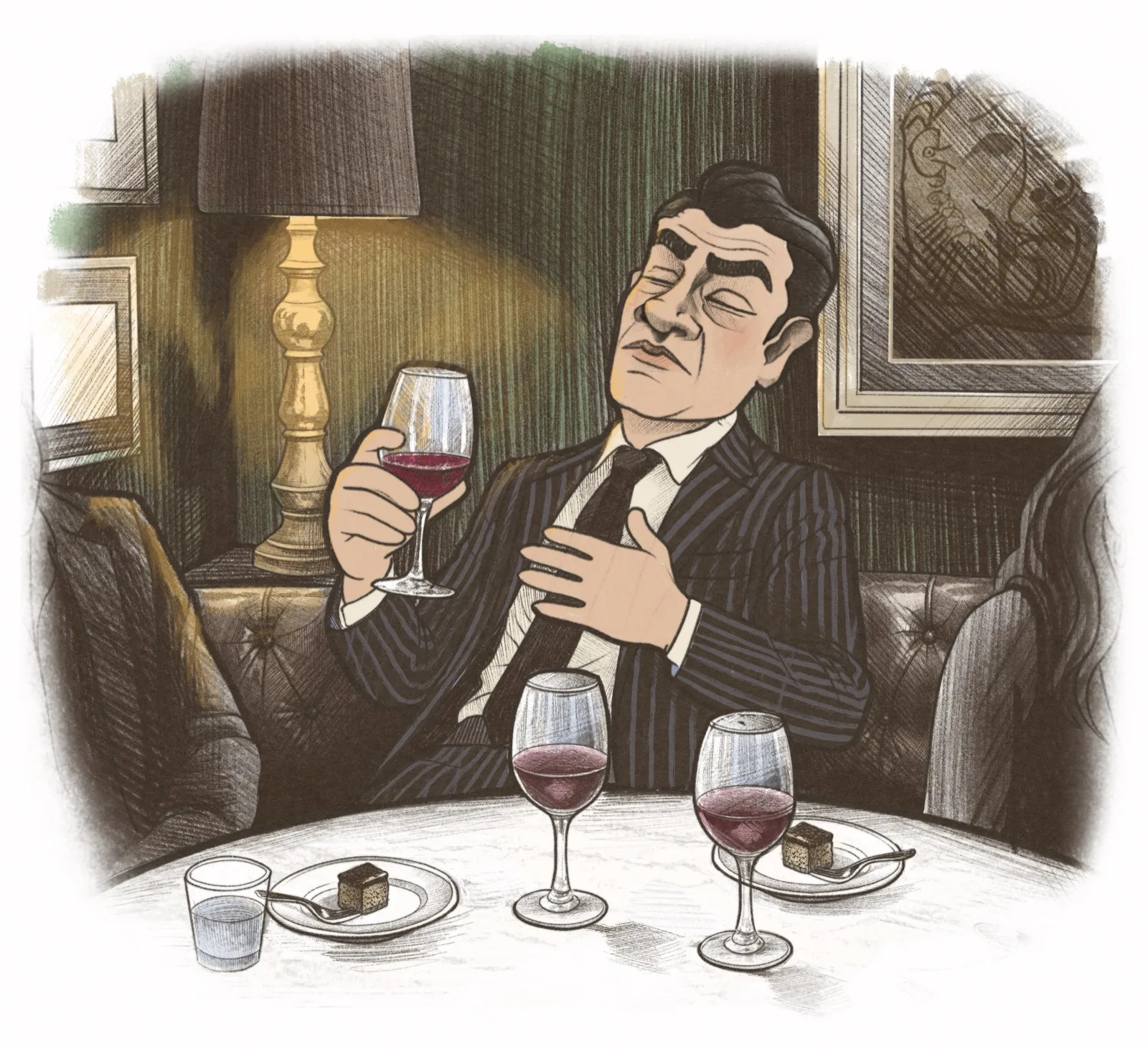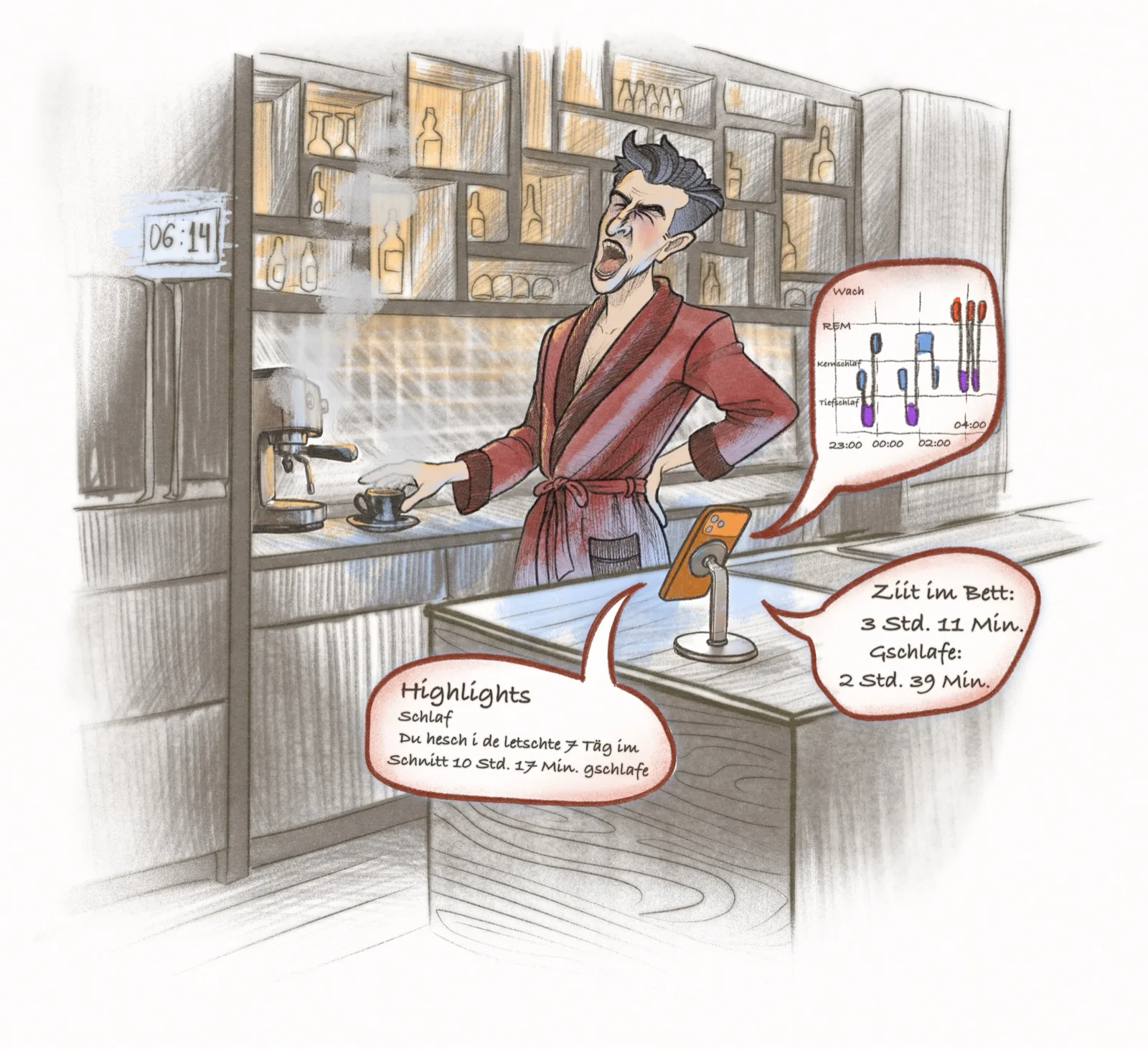
Someone who suddenly develops stomach complaints at 50 that no gastroscopy can explain, who wakes at night with tinnitus and starts the morning with pressure in the head, who sits in a board meeting wondering why the feeling in the chest will not go away, rarely ends up straight at the psychiatrist. They end up at the GP, the Hausarzt in Swiss terms. That is exactly where the first somatic warning signs of chronic overload are recognised or missed. This text is for managers, self-employed professionals and CFOs who recognise the pattern in themselves or a colleague and want to know what an internal-medicine consultation can do at the start.
What an internal-medicine burnout work-up does in the consultation
Why burnout goes to the stomach, the head and sleep first
Burnout is not a disease in its own right. In the ICD-11, the WHO classifies it as a factor influencing health status (QD85) rather than as a psychiatric diagnosis in the narrow sense [WHO ICD-11 QD85, 2019]. The three dimensions are clearly defined: exhaustion, mental distance from work and reduced professional performance. What the official definition does not mention, and what every GP knows: before a patient names the psychological dimensions, they come with the body. They come with the stomach, with the head, with sleep, with tinnitus, with the feeling in the chest.
That is no coincidence. Chronic strain shifts the autonomic balance towards the sympathetic nervous system, the pain threshold drops, visceral perception becomes more sensitive, sleep fragments. The scientific literature on burnout is vast, over 15 000 publications, and in parts contradictory, yet the somatic symptom burden as an early signal is consistently described [Hillert et al., Frontiers in Psychiatry 2020]. In Switzerland, around 30 percent of the working population felt emotionally exhausted in 2022, and the share with a critical Job Stress Index score was 28 percent [Gesundheitsförderung Schweiz, Job-Stress-Index 2022]. Practice reality matches that figure. In our daily work, three in ten consultation requests for non-specific complaints have a work-related component.
Burn-out is a syndrome conceptualized as resulting from chronic workplace stress that has not been successfully managed.
The five somatic early signs that keep arriving in the consultation
- Chronic tension-type headache or pressure headache. Bilateral, dull, often starting in the late morning, different at weekends. Anyone taking ibuprofen or paracetamol daily for months is heading towards medication-overuse headache. Here one must distinguish between primary tension-type headache, migraine and secondary causes.
- Chronic functional stomach complaints. Pressure in the upper abdomen, nausea without vomiting, reflux without a hiatus hernia, irritable-bowel-like symptoms alternating between constipation and loose stools. Often already endoscopically unremarkable, which frequently frustrates the patient. A normal endoscopy does not rule out that the gut is suffering too; it only confirms there is no structural pathology.
- Sleep disturbance with prolonged sleep latency and early-morning waking. Asleep after midnight, awake at 4 am with racing thoughts, hard to get back to sleep, shattered in the morning. If snoring, observed breathing pauses or daytime sleepiness join the picture, a sleep apnoea work-up belongs in the diagnostics.
- Tinnitus or hyperacusis without an otological correlate. High-pitched whistling, bilateral, often for weeks, sometimes after an acute stress event. The ENT work-up is normal, and the patient still hears the whistling. Tinnitus as a stress symptom is a diagnosis that ought to be made more often in everyday general practice.
- Non-specific chest tightness or palpitations. Chest pressure unrelated to exertion, that comes at rest and disappears when jogging, palpitations without ECG pathology. This presentation belongs in a cardiology work-up (see the cross-brand link further down), but in the majority of cases it is autonomic and functional in nature. The consultation draws that line, and the patient should not have to.
What unites these five: each symptom has a somatic differential diagnosis we need to work up before confirming the psychosomatic component. That is precisely the task of an internal-medicine consultation.
Exhaustion from strain versus a burnout state
An important distinction that many patients and many physicians blur. Exhaustion from strain is a temporary reaction to a specific phase: quarter-end closing, a restructuring, a separation, a period of caring for a family member. It has a beginning, it has an end, it responds to rest. A burnout state in the sense of the WHO definition is the form that has become entrenched: the exhaustion stays after the weekend, after the holiday, after the end of the quarter. Mental distance from work becomes the dominant attitude. Self-efficacy erodes.
The diagnostics separate the two clinically by duration, responsiveness and the severity of the three ICD-11 dimensions [Maslach and Jackson, Journal of Occupational Behaviour 1981]. In general practice the distinction matters because it changes the therapeutic approach. Exhaustion from strain can often be resolved by taking stock of where you stand, sleep hygiene, exercise, a clearly defined window of time off and a sensible restructuring of your work. A burnout state usually needs more: psychotherapeutic support, sometimes day-patient psychosomatic treatment, sometimes a clearly time-limited sick note (the Swiss Arztzeugnis) with a return-to-work plan.
The transitions to depression are fluid. Around half of the people who experience themselves as burnt out do not meet the criteria for clinical depression [Hillert et al., Frontiers in Psychiatry 2020]. The other half do. That is no small detail. An unrecognised depression behind a self-diagnosis of burnout delays the right treatment.
What the internal-medicine work-up covers and what it rules out
- Thyroid function. TSH, and free T4 and T3 if abnormal. Subclinical hypothyroidism reliably mimics a burnout picture, and so does hyperthyroidism (with a different emphasis: irritability, sleep disturbance, palpitations).
- Iron status. Ferritin as stored iron, transferrin saturation, haemoglobin. A ferritin below 30 µg/L explains fatigue even without anaemia. It is common in women and rare in men, where it always needs investigating (gastrointestinal source of bleeding).
- Vitamin status. B12 and vitamin D. A B12 deficiency develops insidiously with cognitive symptoms, and a severe vitamin D deficiency accompanies diffuse musculoskeletal complaints.
- Blood sugar and metabolism. HbA1c, fasting glucose, lipid profile. A previously unrecognised prediabetes or insulin resistance explains daytime tiredness after meals.
- Inflammatory status. hsCRP, differential blood count. Chronic inflammation (autoimmune disease, chronic infection) belongs in the differential diagnosis of exhaustion.
- Sleep quality. Structured history and a low threshold for outpatient polygraphy. Untreated obstructive sleep apnoea produces exactly the picture that many patients interpret as burnout.
- Basic cardiac diagnostics. Resting ECG, blood pressure, and if abnormal 24-hour blood pressure monitoring and echocardiography. Chest tightness on exertion belongs in a cardiology work-up rather than in psychosomatic medicine.
- Cortisol and endocrine axes. Where indicated, never routinely. A basal morning cortisol makes sense when an adrenal disorder is suspected. As a burnout marker it has no place (there is no valid biomarker for burnout).
If the internal-medicine work-up remains somatically unremarkable and the ICD-11 criteria are clinically met, the psychosomatic component is confirmed. That is a clinical finding with therapeutic consequences, a long way from a diagnosis of exclusion delivered with a shrug.
When the GP can manage the situation and when it belongs with a specialist
- GP-led care alone is sufficient. Exhaustion with a clearly identifiable trigger, ICD-11 dimensions moderately pronounced, no suicidal thoughts, no alcohol or substance problem, no loss of function in daily life. We work with taking stock, sleep hygiene, prescribed exercise, workplace advice and possibly a short sick note with a return-to-work plan. Follow-up after four to six weeks.
- GP plus psychotherapy. Persistent symptoms despite initial measures, pronounced mental distance, signs of a depressive component. We continue the somatic care and connect you with a psychotherapist in the neighbourhood (in Zürich a place is usually available within two to four weeks, faster for initial sessions).
- Direct referral to psychiatric or psychosomatic specialist care. Suicidal thoughts, a pronounced depressive episode, accompanying psychotic symptoms, severe sleep disturbance with loss of function, substance problems, no stabilisation despite GP and psychotherapeutic care over six to eight weeks. We issue the referral the same day; where inpatient care is needed, we coordinate admission directly.
A fourth constellation deserves separate mention. If chest tightness, persistent breathlessness on exertion or newly diagnosed high blood pressure are part of the picture, a cardiology work-up runs in parallel. Silent cardiac risk behind burnout complaints is more than a theoretical construct. It is one of the constellations we investigate jointly in the Dein Team internal-medicine and cardiology network (see Burnout and silent cardiac risk · DTH, in German).
What to bring to the first consultation
A short note is enough. Three sentences on your current workload, three sentences on the physical symptoms with onset and course, a list of medications and supplements, and any previous results from the last two years if you have them. We take 60 to 90 minutes. There is no judgement. There is an assessment.
Where to read on
- Chronic pain · multimodal therapy for the somatic axis when pain is the leading symptom.