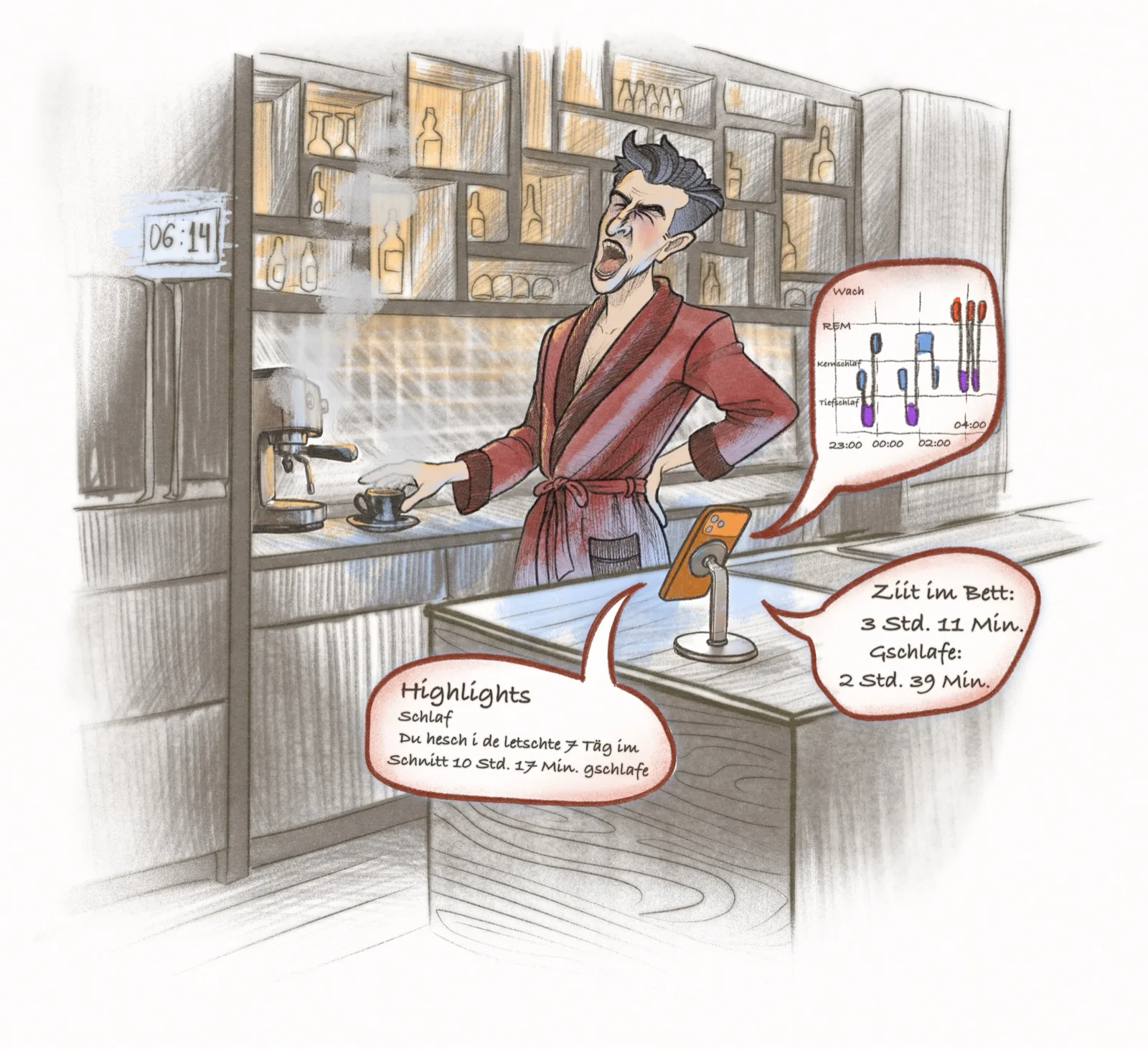
If you have been exhausted for months and nobody has yet been able to give you a plausible explanation, you are not alone. Chronic fatigue syndrome (ME/CFS) is one of the most complex and most underestimated conditions in modern medicine. Estimates suggest that millions of people worldwide are affected [Lim EJ et al., J Transl Med 2020], often following a viral infection such as SARS-CoV-2 (post-COVID) or the Epstein-Barr virus (EBV). Yet for many of those affected, the illness remains a long road shaped by misunderstanding.
As a practice rooted in internal medicine, we regard ME/CFS as what the science shows it to be: a serious, organic multisystem disease with demonstrable immunological, autonomic and cellular dysfunctions [Institute of Medicine 2015; Bateman L et al., Mayo Clin Proc 2021]. It is not a purely subjective feeling of exhaustion.
The scientific facts: what happens in the body with ME/CFS
Research into the pathophysiological basis of ME/CFS has made significant progress in recent years. We now know that the illness rests on an interplay of several biological systems.
Mitochondrial dysfunction and impaired energy metabolism. The cardinal clinical symptom of ME/CFS is what is known as post-exertional malaise (PEM), an often dramatic deterioration in general condition after minimal physical or mental exertion [Bateman L et al., Mayo Clin Proc 2021]. There is evidence that the production and use of the cellular energy carrier adenosine triphosphate (ATP) is impaired in those affected. When exertion is repeated on two consecutive days, performance at the anaerobic threshold drops markedly, and lactate, or acidosis in blood and muscle, is cleared less effectively, which could explain the prolonged states of exhaustion after exertion. A classic, linear build-up of exercise (graded exercise therapy), once recommended as the standard, can worsen the condition and is therefore no longer recommended for ME/CFS [Bateman L et al., Mayo Clin Proc 2021; NICE NG206 2021].
Cellular and humoral immune imbalance. From an immunological point of view, we see laboratory signs of chronic, low-grade inflammation in many patients at our practice. Specialised laboratory analyses (functional cytotoxicity assays) frequently reveal reduced activity of natural killer cells (NK cells), although this finding on its own is not diagnostic [Institute of Medicine 2015]. This cellular imbalance could impair the body's ability to clear viral pathogens adequately. At our practice we also often see selective immunoglobulin subclass deficiencies (such as IgG1 or IgG4 deficits), which go hand in hand with a pronounced susceptibility to infection.
Dysregulation of the autonomic nervous system. Many of those affected suffer from orthostatic intolerance, that is, symptoms such as dizziness, a racing heart or light-headedness when standing or sitting for long periods. This is frequently an expression of autonomic dysregulation, for instance in the form of postural orthostatic tachycardia syndrome (POTS) [Bateman L et al., Mayo Clin Proc 2021].
Metabolic deficits as amplifiers. Chronic inflammatory processes increase the need for certain micronutrients. In our clinical experience, latent iron deficiency and deficits in co-factors of cell division and nerve metabolism (such as vitamin B12, folic acid, selenium and vitamin D3) often act as additional triggers that can further intensify mitochondrial dysfunction and neurological sensory disturbances (such as tingling paraesthesia).
Immunological and mitochondrial changes resembling those in ME/CFS are also found in long COVID patients [Peppercorn K et al., Sci Rep 2023].
Quality of life in focus: ME/CFS affects the whole system
An international survey of more than 1,400 people affected and their relatives shows a severely reduced health-related quality of life, most markedly in everyday activities, pain and mobility, and least in the dimension of anxiety and depression [Vyas J et al., BMJ Open 2022]. Because coping with everyday life demands immense strength, family and partners are heavily affected as well.
This makes precise diagnostics all the more important: a work-up that captures the patient as a whole and cleanly separates structural, metabolic and immunological factors from one another.
Our multidisciplinary approach and our specialist network
Because ME/CFS is a systemic illness that sits at the interfaces between several medical disciplines, looking at individual symptoms in isolation falls short. The diagnostic criteria themselves have evolved several times over the decades, among other things to distinguish the illness more clearly from purely psychiatric differential diagnoses [Lim EJ & Son CG, J Transl Med 2020]. Our multidisciplinary approach allows us to build the pathophysiological bridges between your chronic pain, the immunological particularities, orthopaedic interactions and the autonomic stress axis.
To meet this complex challenge at a high medical standard, we work hand in hand with an established, specialised network of consultant physicians, including cardiologists, gastroenterologists, radiologists, orthopaedic surgeons and neurologists. This close interdisciplinary cooperation gives us broad-based, differentiated diagnostics (for example to rule out cardiogenic circulatory disorders, cervical instability or chronic inflammatory bowel disease) as well as patient-centred care tailored to the individual.
Our coordinated care concept
At our practice, Dein Team fürs Leben, we regard the human body as an interconnected whole. Our coordinated treatment concept comprises:
- Specialised immune diagnostics and metabolic analyses: Broad laboratory testing (including cellular immune status, micronutrient profiles and cardiometabolic markers) to identify individual deficits.
- Targeted replacement of proven deficiencies: Where a deficit is confirmed by laboratory testing (e.g. iron, vitamin B12, folic acid, vitamin D), tailored and monitored oral replacement, or parenteral replacement where absorption is impaired, with follow-up checks.
- Support with energy management (pacing): Guidance on an individual, regenerative approach to managing activity, in order to avoid severe setbacks ("crashes") and keep the exertion limit stable within the aerobic range.
- Interdisciplinary pain and regulation therapy: Close collaboration in treating myofascial pain generators, accompanying orthopaedic symptoms and autonomic dysregulation.
If you suffer from persistent, severe exhaustion, cognitive impairment ("brain fog") or marked symptoms after exertion, we are at your side with our combined expertise. We take the time needed to untangle this complex condition and, together with our network partners, build a solid diagnostic foundation for stabilisation and step-by-step improvement.
Frequently asked questions about ME/CFS
Is ME/CFS a mental illness? No. ME/CFS is an organic multisystem disease with demonstrable immunological, autonomic and cellular dysfunctions [Institute of Medicine 2015]. This does not rule out that some of those affected additionally develop reactive anxiety or a depressive mood, for instance through the burden of the illness itself. Such a comorbidity is treated alongside where needed. It is not the cause of ME/CFS.
What is post-exertional malaise? A marked deterioration in condition after minimal physical or mental exertion, and the cardinal symptom of ME/CFS [Bateman L et al., Mayo Clin Proc 2021].
Why are sport and a linear build-up of exercise advised against? Because with repeated exertion, those affected measurably reach the anaerobic threshold earlier [Bateman L et al., Mayo Clin Proc 2021]. A linear build-up of exercise can worsen the condition and is no longer recommended [NICE NG206 2021]; pacing protects against setbacks.
Can a viral infection trigger ME/CFS? Yes. Common triggers include SARS-CoV-2 and the Epstein-Barr virus [Bateman L et al., Mayo Clin Proc 2021].
How does the work-up at Dein Team fürs Leben proceed? Through a network of cardiology, gastroenterology, radiology, orthopaedics and neurology, complemented by specialised immune and metabolic diagnostics at our practice. We then discuss an individual pacing and treatment concept with you.
Written and medically reviewed by Prof. Dr. Craig K. Fritz M.Sc., Titular Professor, Physician Associate, Practice Lead, Dein Team fürs Leben.