For weeks you have noticed that something is wrong. He comes home late, hardly eats, sleeps badly, stares into space in the evening. He says "everything's fine" and perhaps even means it, because he has no comparison with how he used to be. You have that comparison. This text describes the warning signs that separate overload from burnout, explains what a GP appointment actually does, and gives you sentences for the conversation at home. You are not taking on his therapy. You are opening the door to the treatment he is entitled to.
What you need to know now
Overload or burnout · the clinical distinction
The question you most often bring to the consultation: is this just stress, or something else? The answer comes from comparing patterns. Overload is acute and reversible: two intense weeks, a weekend without appointments, and afterwards he is himself again. Burnout is chronic, cumulative, and outlasts the break. The ICD-11 definition is explicit: three dimensions, all three must persist over a longer period, all three must relate to the sphere of work [WHO, ICD-11 QD85, 2019].
In practical terms: if a protected week does not bring him back to himself, if things that used to give him pleasure now get the energy of a compulsory appointment, if he wakes up exhausted in the morning after seven hours of sleep, these are indications. Any one of these on its own can also point to an underactive thyroid, untreated sleep apnoea, iron deficiency or the beginning of a depressive episode. That is exactly why the first appointment belongs with the GP, not with a burnout coach. Scientific reviews stress that burnout symptoms are non-specific and must always be distinguished from psychiatric and somatic differential diagnoses [Hillert A et al., Frontiers in Psychiatry 2020].
The warning signs you are most likely to see as his partner
You see things he does not see himself, because you have the comparison. The following observations correspond to Maslach's three clinically validated burnout dimensions (exhaustion, mental distancing and reduced efficacy), supplemented by the somatic and behavioural phenomena that often accompany them in general practice [Maslach C et al., Annual Review of Psychology 2001].
- He can no longer switch off. Even on holiday the phone rings, and spreadsheets keep running in his head. A protected week does not bring his body to rest.
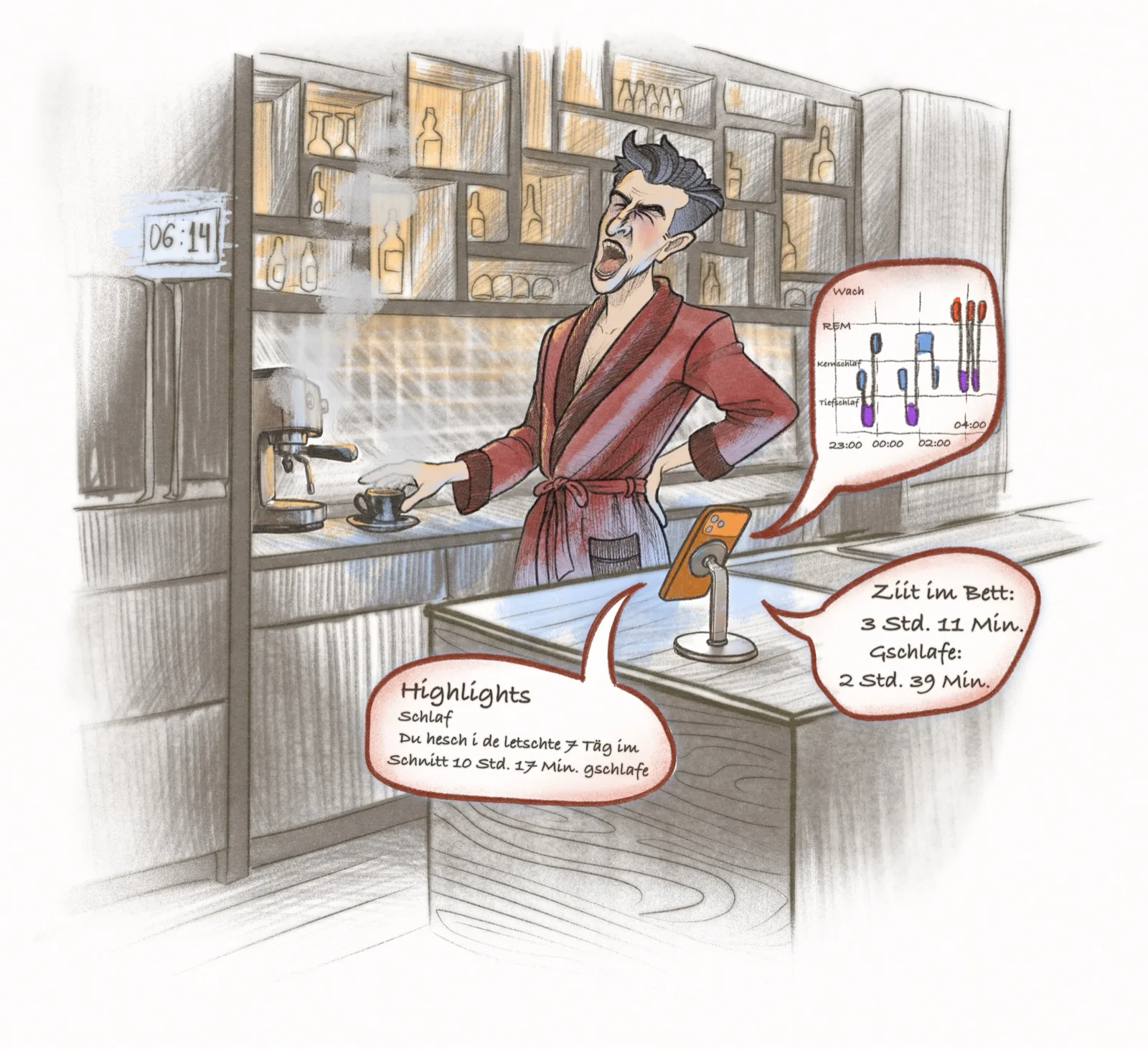
- Sleep is no longer restorative. Waking early between three and five, thoughts immediately at work. Or seven hours of sleep and exhaustion in the morning.
- Somatic complaints without a clear cause. Stomach and bowel problems, tension headaches, dizziness, palpitations, new-onset high blood pressure. The examination finds little that is structural. That does not rule out burnout. It can be its leading symptom [Stansfeld S, Candy B, SJWEH 2006].
- Cynicism or mental distancing. "I don't care", "let the next person do it", "the others are all idiots anyway". In the ICD-11 that is the second burnout dimension.
- Reduced efficacy, which he feels first. He says "I can't get anything done any more", although objectively a great deal still works. That is the third ICD-11 dimension.
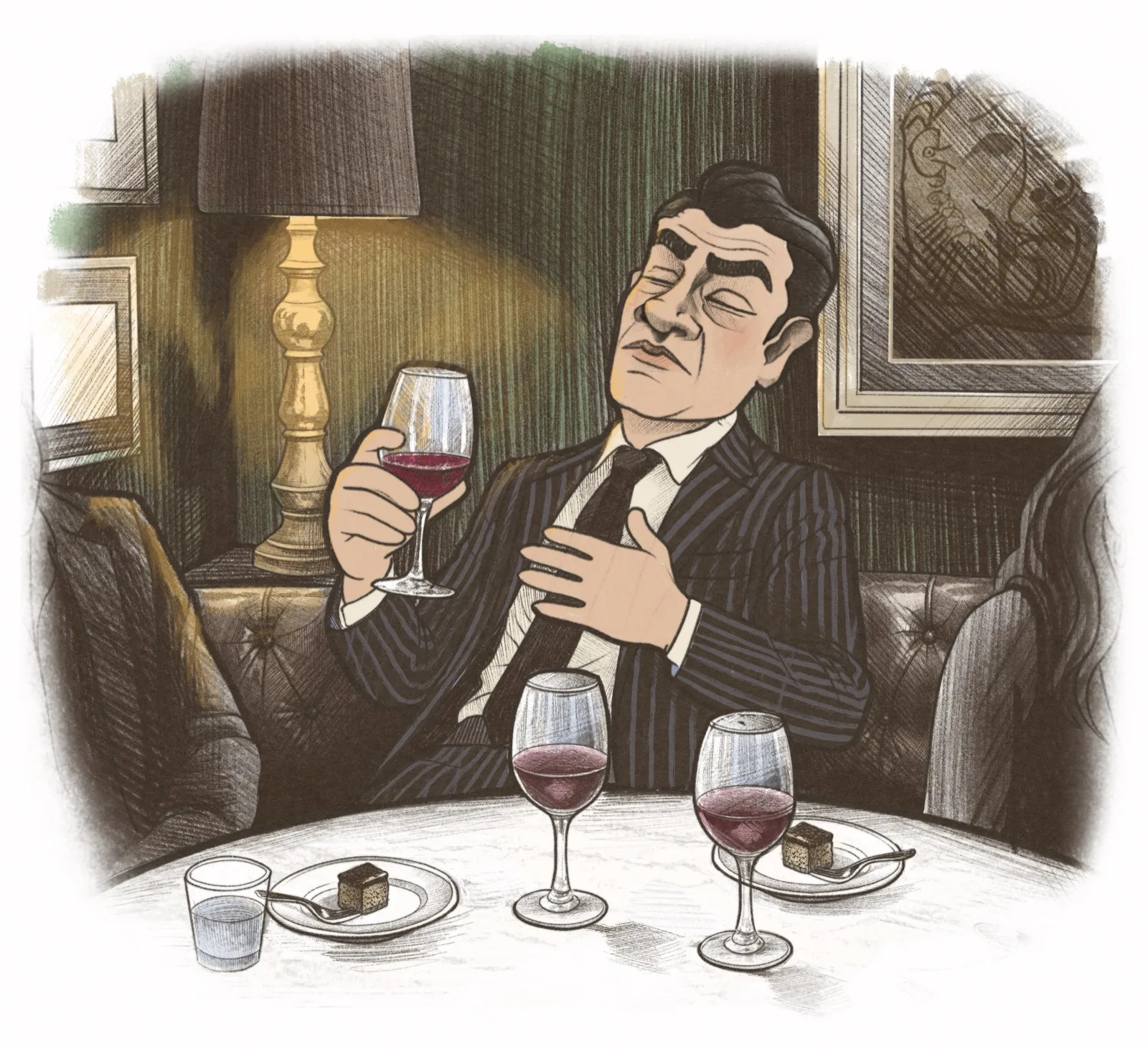
- Social withdrawal and anhedonia. Plans with friends get cancelled, hobbies lie dormant, wine no longer tastes of anything, sex becomes rarer. If that goes on for weeks, it belongs in the medical history.
- Substance use for self-regulation. More alcohol in the evening, sleeping pills without a prescription. That is a symptom.
If three or more of these points have persisted for more than six weeks, that is the clinical threshold for an appointment, not "when he is ready". Often he only becomes ready when the body takes over the conversation: sudden hearing loss, tinnitus, gastric bleeding, a hypertensive crisis. Chronic work-related strain is associated with increased risks for exactly these somatic endpoints [Stansfeld S, Candy B, SJWEH 2006]. The assessment comes before that.
What a GP appointment actually does
A first GP appointment for suspected burnout is not an open-ended "let's have a chat". It is a structured clinical process. Three things happen in parallel.
First: somatic differential diagnosis. Exhaustion and reduced performance have an internal-medicine list that has to be worked through before any psychological diagnosis: thyroid function, iron status including ferritin, a complete blood count, HbA1c, vitamin D, liver and kidney values, a resting ECG, blood pressure measurement (over 24 hours where necessary), and a sleep history with a low threshold for outpatient polygraphy. Sleep apnoea, hypothyroidism and iron deficiency can mimic a burnout picture to the point of confusion.
Second: psychometric assessment. The Maslach Burnout Inventory has been the most frequently validated instrument internationally for more than three decades [Schaufeli WB et al., Career Development International 2009]. We combine it with a depression screening such as the PHQ-9. Burnout and depression overlap clinically, but the treatment differs. A Finnish longitudinal study showed that people with clinically relevant burnout carried a markedly increased risk over four years of meeting the criteria for a depressive episode [Ahola K et al., Burnout Research 2014].
Third: a joint decision about the way forward. For isolated early-stage burnout without depression, GP-led care with a time-limited reduction of workload and outpatient psychotherapy is often sufficient. For moderate or severe depression, the path leads to psychiatry. Where the burden of illness is high, a psychosomatic day clinic or inpatient rehabilitation is indicated [SAMW position paper 2019; Obsan report 2020].
:::pull-quote{author="Prof. Dr. C.K. Fritz M.Sc., Physician Associate" cite="DTL consultation"} The most difficult diagnosis in the burnout spectrum is not the exhaustion. It is the question of whether a depression lies beneath it that has to be treated differently. Making that distinction is the task of the first two appointments. :::
How to raise the subject at home
Burnout conversations often fail at the opening. "You have burnout" is a diagnosis that is not yours to make, and it forces him to defend himself. "You have to see a doctor" is an order, and autonomy is the last thing an exhausted person still has. What works: an observation that you name without interpreting it, plus a low-threshold suggestion.
Three openings that work in practice:
- "I've noticed that you've been sleeping differently for a few weeks. I'm worried, and I'd like someone to take a look at it." That describes what you have seen and leaves the diagnosis to the doctor. It shows you as the one who is worried rather than the one who labels.
- "Can we book a GP appointment together? I'll come along if you want, or I'll wait outside. You decide." You offer to come along and leave the choice with him. That lowers the hurdle without taking away his autonomy.
- "I'm afraid we'll ignore this until your body tells us. Let's go before that happens." That is honest without becoming dramatic. It puts your worry on the table and leaves reproach out of it.
Avoid blame ("you come home too late"), comparisons with the past ("you used to be such fun") and threats. All of that shifts the conversation from his health to the relationship. That is not what this is about, and it is not something he can carry right now.
If he refuses, let the subject drop for now. Bring it up again in ten days, when a new symptom has appeared. Burnout develops over months, so you have time. What you do not have is the patience for a year.
What your role is · and what it is not
A partner who takes on the therapy of a burnout patient herself harms him and herself. You are his confidante, not his therapist. Social support has been shown empirically to act as a protective factor in stress and burnout research, as long as the partnership remains a partnership and does not turn into a therapeutic asymmetry [Stansfeld S, Candy B, SJWEH 2006].
- Your role: observe and name. You say what you see, without a diagnosis. "You've hardly eaten for two weeks" is an observation.
- Not your role: to treat. When he talks, listen. No strategies, no exercises, no reframing. That is the job of a psychotherapist.
- Your role: organise the appointment if he delegates it. Phone, book the appointment, offer to come along. Carrying the logistics takes a weight off him.
- Not your role: to force the appointment. Preparing, yes. Compelling, no. If he cancels the first one, do not book a second without him.
- Your role: keep your own sources of energy alive. Friends, sport, sleep, your own therapy if needed. If you carry everything without support, you become a patient yourself.
- Not your role: to compensate one-to-one for his load. More housework, more caring, more logistics with the children. Raise it before it tips over.
- Your role: recognise the crisis. Suicidal thoughts, acute despair or a sudden deterioration are signals for 143, 144 or emergency psychiatry.
- Not your role: crisis intervention in the living room. In an acute crisis, call professional help.
You are also allowed to get help for yourself: advice from your own GP, a conversation at Pro Mente Sana (the Swiss mental-health foundation), an hour with a psychotherapist to take stock. That is self-care.
What happens after the first appointment
A single appointment is an assessment, not a solution. Over the following two to three weeks the laboratory results come back; in parallel, a polygraphy appointment or a cardiology work-up can take place. Only then is a differential diagnosis on the table.
For burnout in the narrower ICD-11 sense without accompanying depression, treatment typically begins with three parallel lines: a clearly time-limited reduction of workload (often six to twelve weeks, certified by a physician), outpatient psychotherapy for the stress patterns, and GP-led care for the somatic symptoms. If depression is present, a psychiatric co-assessment is added. In severe cases, a psychosomatic day clinic or inpatient rehabilitation is considered [SAMW position paper 2019].
A frequent question from your husband: "If I'm signed off sick, will my employer know?" In Switzerland the diagnosis is not communicated. What is transmitted is the incapacity for work; the reason stays with the physician. For many patients, this information noticeably lowers the hurdle to the first appointment.
When it is really urgent
Three situations demand that you do not wait for the next appointment:
- Suicidal thoughts or concrete plans. Asking the question is allowed. If the answer is yes: 143 (Die Dargebotene Hand, around the clock) or 144.
- Acute physical symptoms. Chest pain, shortness of breath, sudden visual disturbances, a hypertensive crisis above 180/110 with symptoms. Burnout is secondary here: 144.
- Substance use that leaves him unable to function. GP appointment the next day, or go directly to an addiction counselling service.
Frequently asked questions
:::faq
Is a GP appointment enough, or do we need a psychiatrist straight away?
In most cases the GP is the right first port of call. The GP carries out the internal-medicine differential diagnosis, performs the assessment and refers on in a targeted way. Going directly to psychiatry makes sense if there are suicidal thoughts, a history of severe depression, or an existing psychiatric treatment that is to be reactivated. The "GP first" sequence is also wiser in insurance terms, because it makes optimal use of the compulsory basic insurance (Grundversicherung) and avoids unnecessary waiting times at psychiatric practices.
Can I book the appointment without him, or accompany him as his wife?
Book it, yes. Attend in his place, no. A preliminary phone call from the partner to the practice is legitimate and is used regularly in our consultation. We take note of your observations so that the first appointment starts in a more structured way. At the appointment itself, the patient is present. You can come along, into the consultation or just the waiting room, if you both want that. Medical confidentiality always relates to him, not to you.
How long does recovery take?
For burnout detected early and without depression, six to twelve weeks of reduced workload with psychotherapy is realistic. For moderate severity or accompanying depression, six to twelve months, with a staged return to work. For a severe course with inpatient rehabilitation, twelve to eighteen months including relapse prevention. These time spans correspond to general and psychosomatic practice and to the range certified for work-related exhaustion syndromes in the Swiss healthcare system [SAMW position paper 2019]. Those who take the process seriously reduce the risk of relapse considerably.
Do we have to tell him it is burnout?
No. You observe, you suggest an appointment. The GP makes the diagnosis. In the end it may be a different one: underactive thyroid, sleep apnoea, depressive episode, iron deficiency, a combination. This openness matters clinically, because the treatment differs.
What if he does not want to?
You cannot force appointments. Raise the subject again in ten to fourteen days, when a new symptom has appeared. Suggest a low-threshold start ("go once, then we decide together"). Or involve a third person he trusts. If there is an acute risk to himself or others, a different logic applies: 143 or 144.
:::
Medically reviewed by: Prof. Dr. med. Steffen Glökler, FESC, MBA, FMH Cardiology, Co-Practice Lead. Reviewed on 4 May 2026.
Delegation model: at Dein Team fürs Leben, parts of the medical services may be provided by qualified practice assistants or Advanced Practice Nurses under medical responsibility, in accordance with the licensing practice of the Health Directorate of the Canton of Zürich.